Valldemossa and Chopin: A Big Lie?
By Arnd
How Poles Become Frenchmen
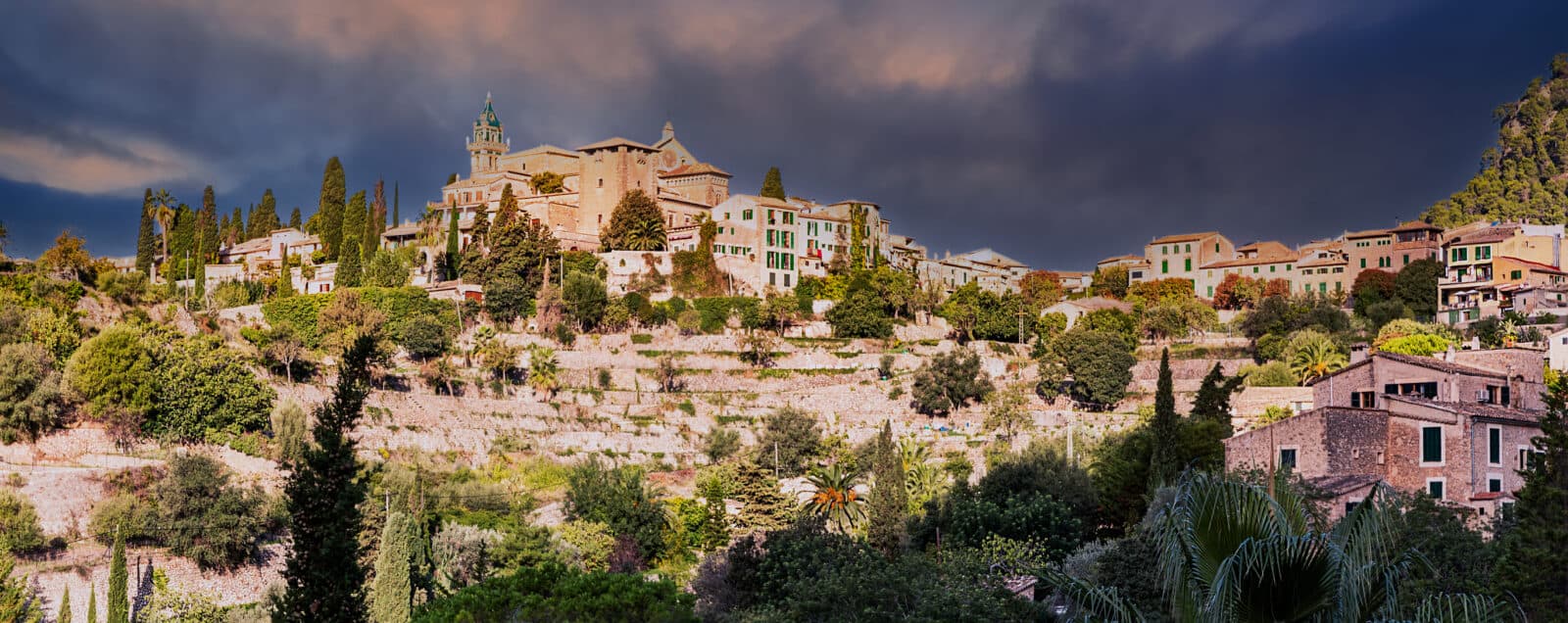
Valldemossa and Chopin seem inseparably linked. The famous "son" of the town of Valldemossa is actually a Pole. Who spent less than two full months in Valldemossa. Yet somehow this brief winter sojourn of 1838/39 has been inflated into a long and intimate stay by a devoted island lover.
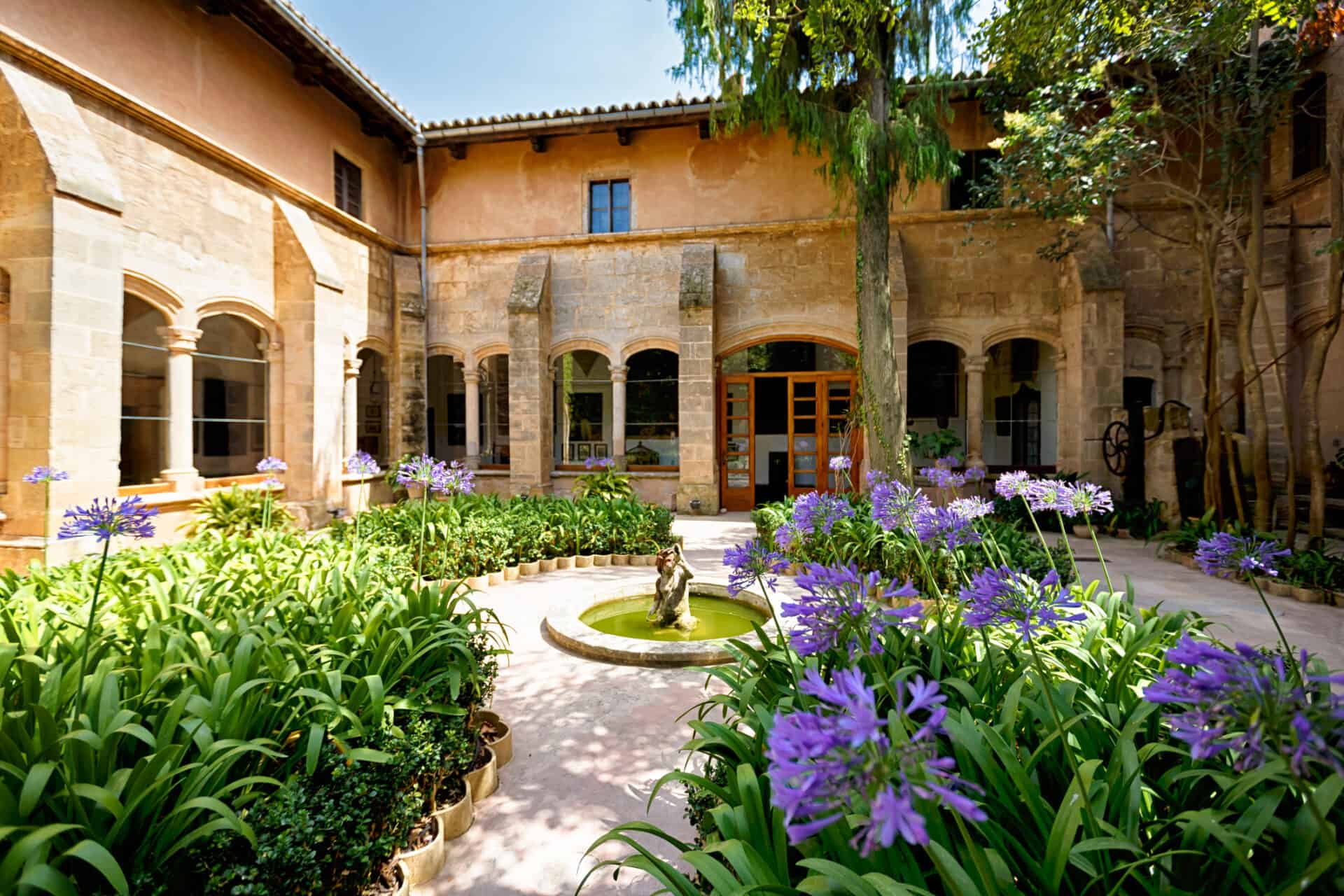
The small mountain town even built a museum for the famous Pole. It tries to tell as much as possible about what was, in truth, a very short period of time. And it does make an effort to maintain historical authenticity.
But let's start from the beginning. When you hear Valldemossa, you surely think of Chopin. And those who are a bit closer to the subject also know there was something about a French writer. And don't we all think that the famous composer and music educator Frédéric Chopin had a passionate affair with this chic Frenchwoman?
Nobody ever quite said that. But when you look into the subject, you'll keep stumbling over phrases like "The town is famous for the passionate love affair that Chopin had here with the writer George Sand." I also had this vague notion that Chopin reached the pinnacle of his creativity here. Naturally inspired by his young muse and companion.
Whatever the case, the truth is: the two were simply a normal couple. And incidentally, the significantly younger one wasn't George Sand, but Chopin. And this couple wanted to spend the winter in Mallorca for the simple reason that one of the children whom Amantine Lupin — as Sand was known by her real name — had brought into the relationship, had fallen ill with rheumatism. Chopin then thought: "If it helps Maurice, maybe it'll help me too" and decided to travel to Perpignan, where the rest of the family was already waiting for the crossing to Barcelona. They then had to endure an extra two weeks there, because that's how long the maestro needed to catch up with the rest of the family.
Once the whole troupe had arrived in Barcelona, they again had to wait five days for the crossing to Mallorca. And the crossing itself took a full two days at that time.
So this was by no means a couple on some hot, short-lived fling. It was a whole family undertaking a weeks-long journey to improve the health of the older brother and the stepfather. And let's not forget: there were neither iPads nor cars back then...
A brief interlude into modern times — let us take to heart the words of the Balearic government and read this quote together:
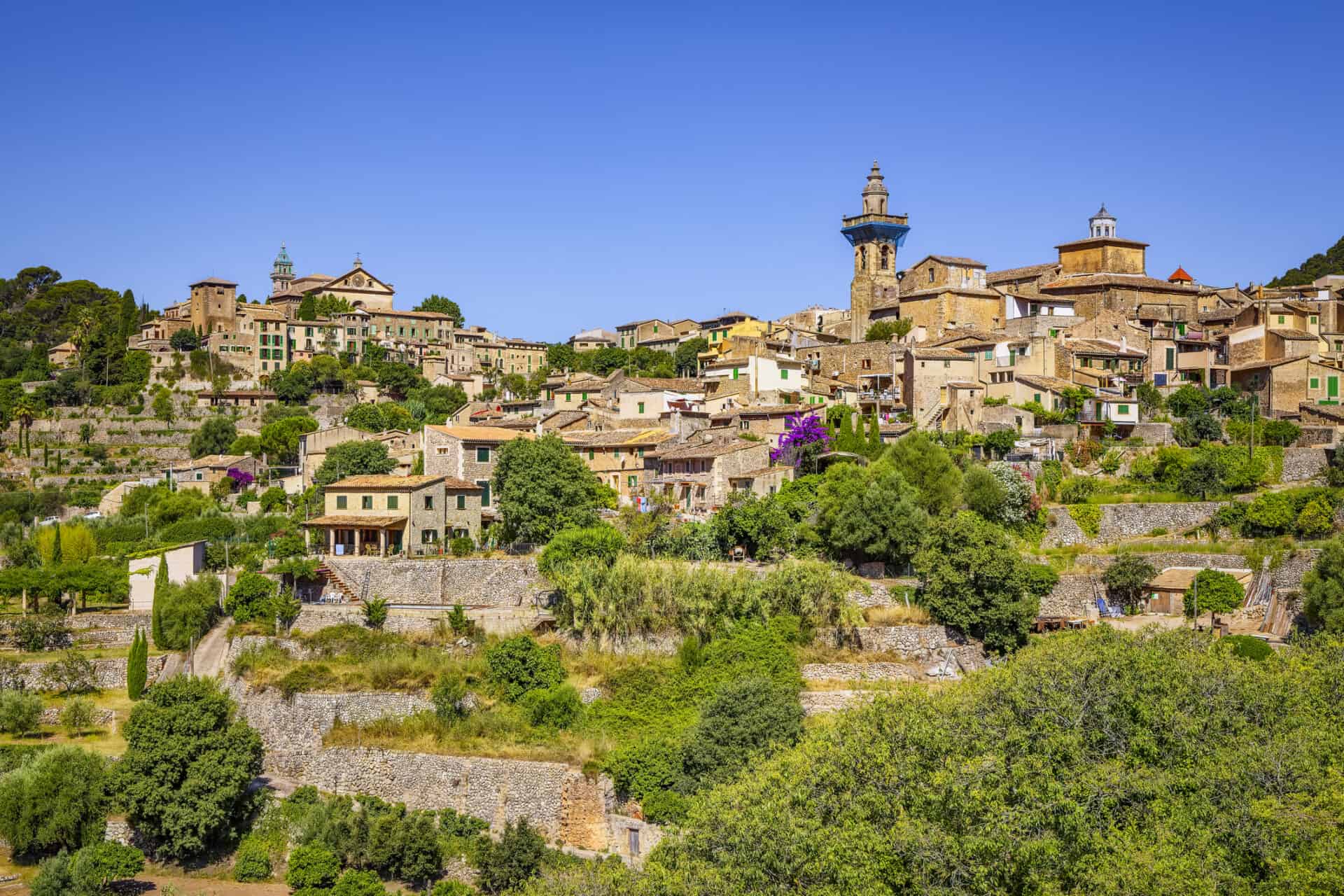
As a protagonist of musical Romanticism, Chopin left indelible traces in the town of Valldemossa, where he lived between November 1838 and February 1839, hoping for an improvement in his fragile health. Despite the brevity of his stay, no one will ever be able to replace the memory of the composer on the island of Mallorca.
https://www.illesbalears.travel/artikel/de/mallorca/auf-den-spuren-von-frederic-chopin
I'm sorry, what?! The poor fellow came to Mallorca to treat his tuberculosis. He initially moved to Establiments. To a country house called "Son Vent." Which means "House of the Wind" in Mallorcan and doesn't exactly suggest a sheltered location. But compared to what came next, this house was probably still the luxury version. Because the local authorities drove the unmarried couple away. On one hand there was concern for public morals, on the other a rather understandable concern for the population's health and hygiene, since Chopin was literally coughing his lungs out. And the authorities rightly suspected that the fine gentleman might be shedding some rather less fine bacteria.
In fact, the family then had no choice but to move into the monastery charterhouse of Valldemossa. Nobody else wanted to go there. Simply because it wasn't a particularly hospitable place in winter. But at least the coughing Chopin didn't bother anyone there anymore.
Madame Sand actually wrote a book about the time in Mallorca titled "A Winter in Mallorca," which was reissued in March 2022 by the Suhrkamp/Insel publishing house.
One of us fell ill; he was of delicate constitution, had developed a severe laryngitis and soon suffered from the effects of the dampness. The House of the Wind (Son Vent in the local dialect), the villa that Señor Gómez had rented to us, became uninhabitable. The walls were so thin that the plaster they were coated with soaked up moisture like a sponge. Never have I suffered so much from the cold, although in reality it wasn't very cold. But for us, accustomed to heating in winter, this house without a fireplace weighed on our shoulders like an icy cloak.
https://www.mallorcamagazin.com/nachrichten/immobilien/2017/01/13/52064/hier-froren-george-sand-und-frederic-chopin-auf-mallorca.html
Not really surprising, but the tuberculosis didn't exactly improve in the monastery charterhouse. So the whole troupe logically set off again in mid-February 1839 to leave the island. Valldemossa and Chopin was simply over!
What a Stupid Idea, Right?
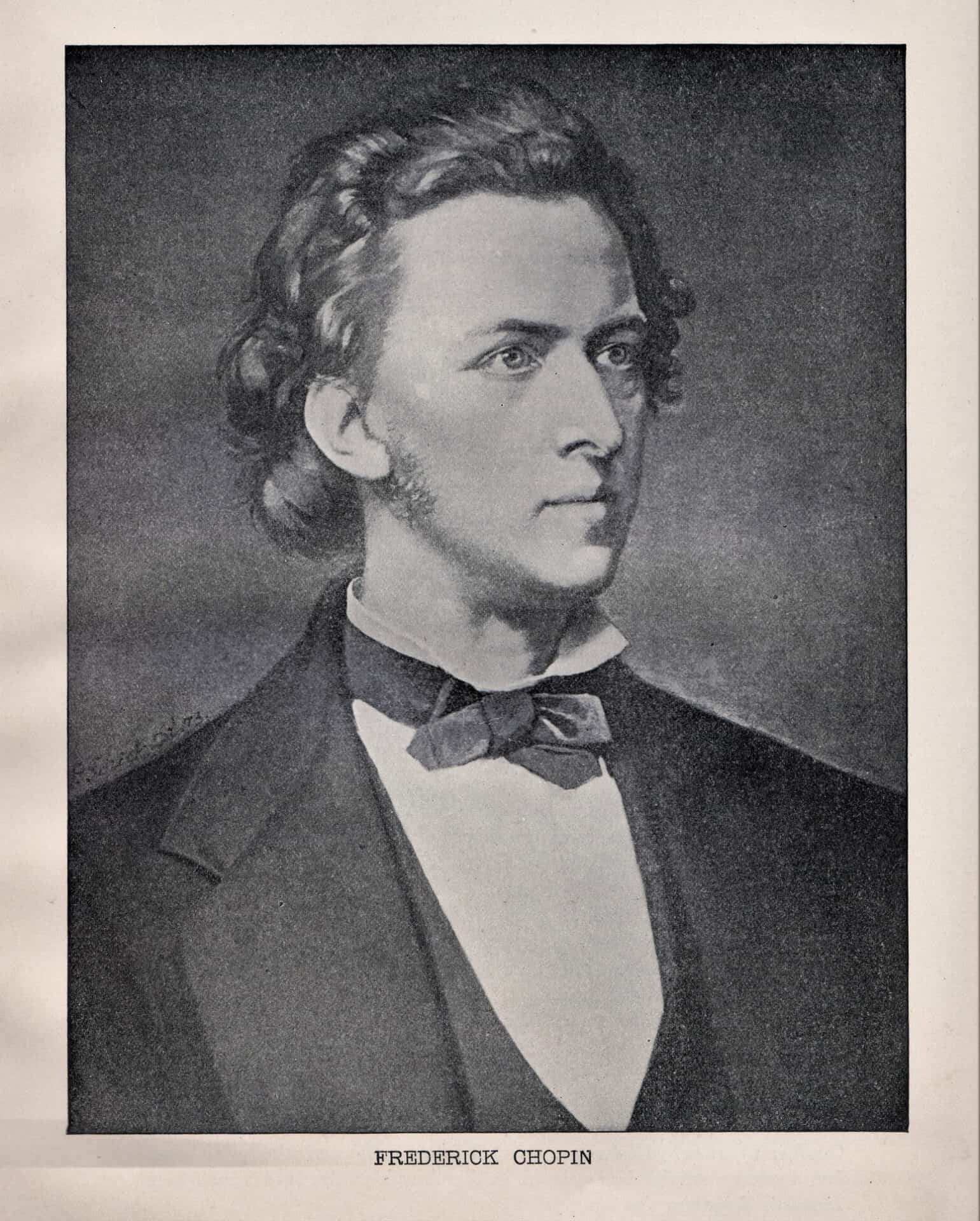
And yes, of course you can only shake your head at such a hare-brained idea. But isn't it equally hare-brained to assume that Chopin fell immortally in love with the island during these three months?! The man is coughing and coughing. Travelling in horse-drawn carriages for days and weeks on end. Because: we're at the beginning of the 19th century. Living in cold and damp monastery cells. That aren't heated at all. His own wife then complains that she has never suffered so much from the cold. And let's not forget: the poor fellow still had to do creative work. He composed 24 Préludes during his time in Mallorca. The most famous of which is, rather tellingly, the "Raindrop Prélude"...
His own piano actually didn't arrive until January. Before that, he had to make do with what he considered a "poor instrument."
And this is exactly the fellow who supposedly falls in love with an island that he must think treated him so badly that he'd never set foot on it again in his life?
You might be thinking: this whole Valldemossa and Chopin business reminds me of Hemingway and Havana. All across that beautiful city, an incredible number of signs pay homage to Hemingway by proclaiming what Hemingway supposedly did in every conceivable mundane life situation in this or that building. There's some truly absurd stuff there — sometimes it's about a single overnight stay. And yet for all of us, Havana is firmly linked with Hemingway.
The Old Man and the Sea?
But the enormous difference is: Hemingway actually spent over 20 years in Cuba. And was revered by the islanders. Quite unlike our Polish friend back then — he didn't exactly go down well with the island folk. The passionate love that the Consell today apparently feels for Chopin was nowhere to be seen back then...
In fact, the crafty Mallorcans have somehow managed to ensure that countless books have been written on the subject. Apparently "a dozen films were even made" (Mallorca Magazin — I couldn't verify this). And an incredible number of tourists wind their way through this actually rather lovely little mountain village. And through the museum, of course.
Please don't misunderstand me: I don't want to dissuade anyone from going to Valldemossa. Or from visiting the museum. I think the town is fantastic. And the museum interesting. I just can't understand at all why the Chopins are still so inseparably linked with Mallorca to this day. When in reality, they never were.