#SlimOldMan - The Semaglutide Experiment
By Arnd
By now I'm 50. And actually, I've been gaining weight ever since I left school. I always gained the most weight when children were on the way — I was "pregnant along with her", so to speak.
To be specific, over the past decades I've always found myself hovering around the 100-kilo mark. And then found it relatively easy to get back down towards 85–90 kilos.
At 183 cm tall, that's still a relatively high BMI. But I somehow also believe in the theory of heavy bones, and even as a fully grown teenager who was actively road cycling, I never weighed under 75 kilos.
Fatty Inflation
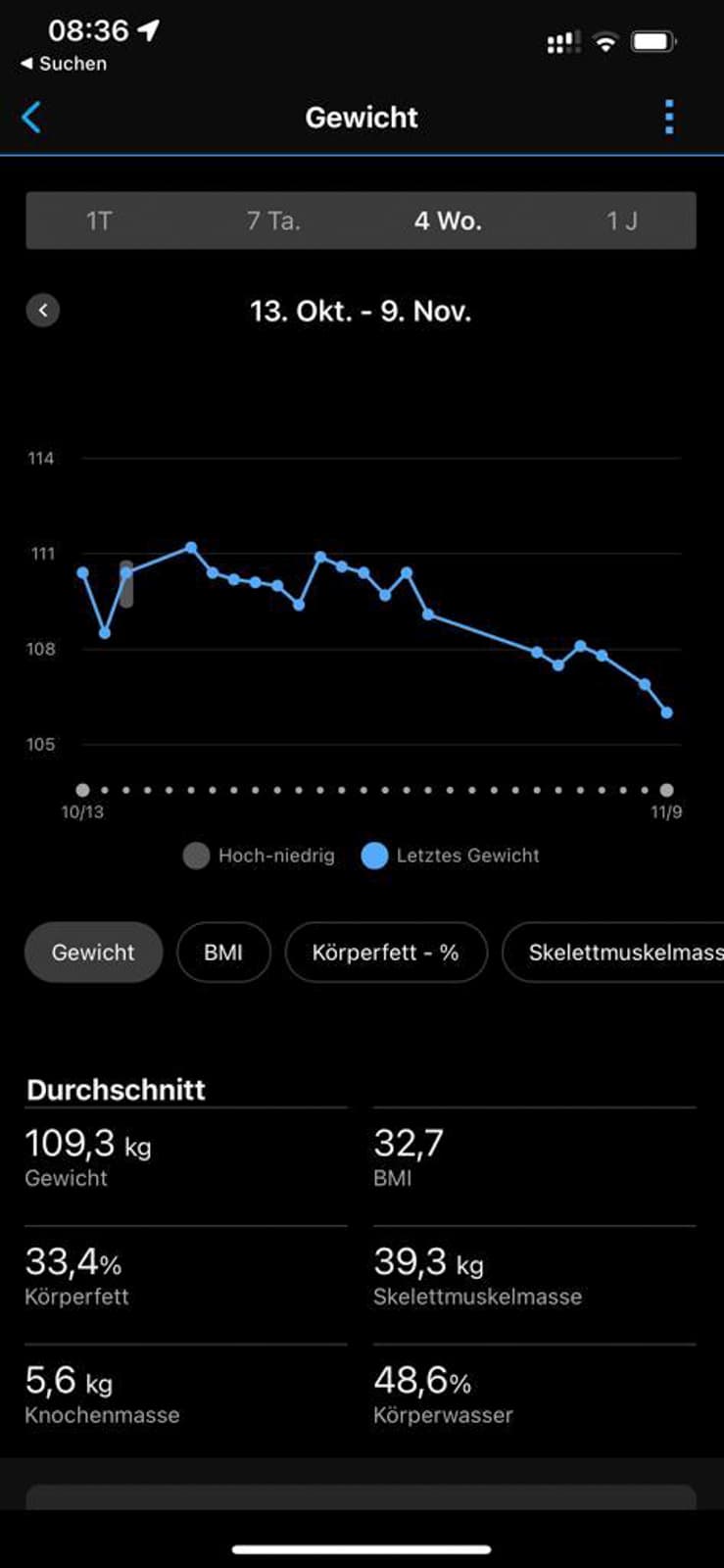
In the last one to two years, my weight suddenly shot up. 10% more fat. My personal inflation, so to speak. The 100-kilo line became the 110-kilo line. With the yo-yo effect of exercise — weight loss — stress — weight gain.
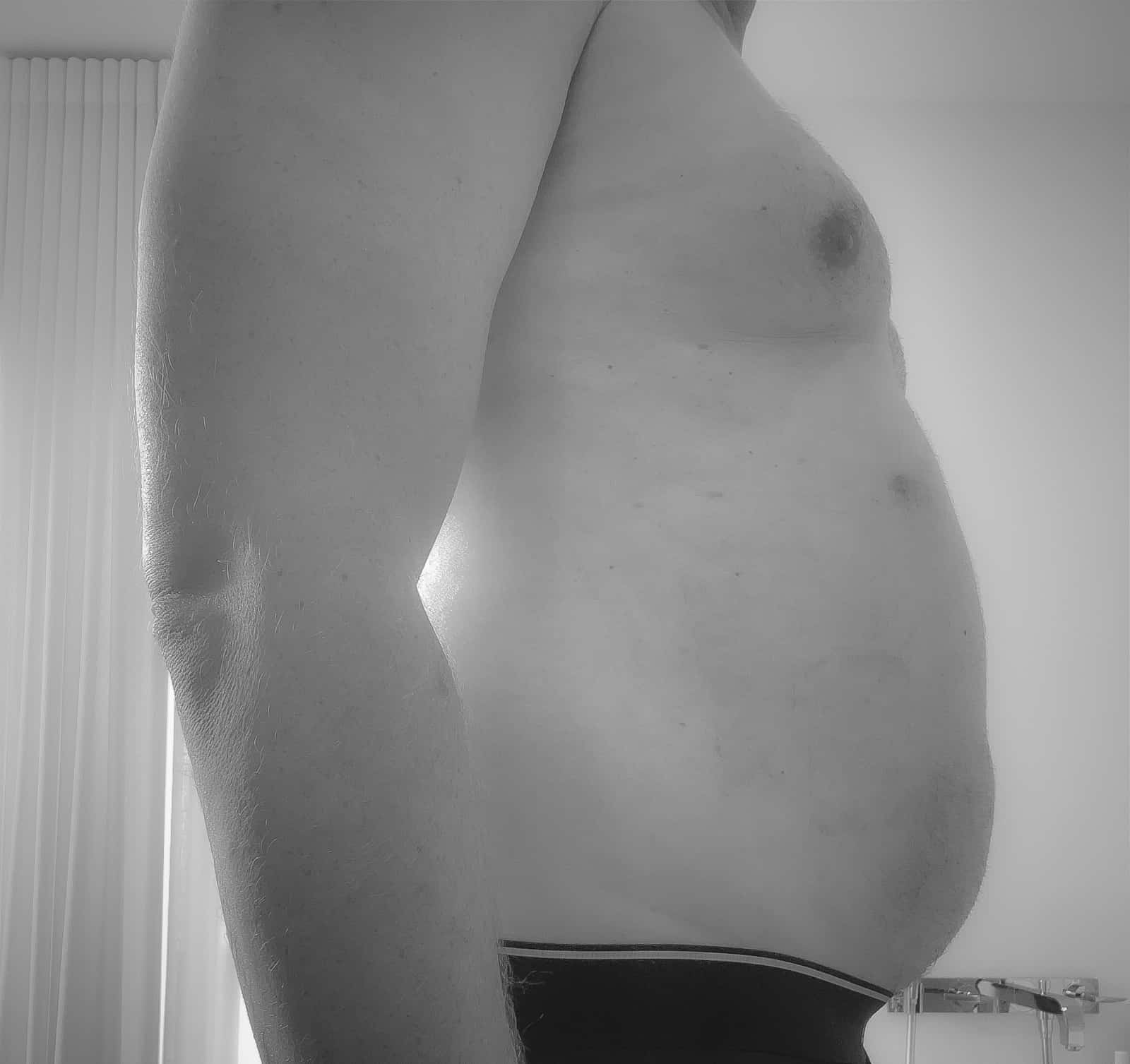
At the doctor's it's always: "Losing weight would be good." But when you're an epicure like me, it's really not easy. I mean, look at this blog... It's 90% about good food... But I also couldn't ignore the fact that many vital values like blood sugar, cholesterol, and liver values had started to develop significantly in the wrong direction. Caused by the excess weight.
The Beginning of the End
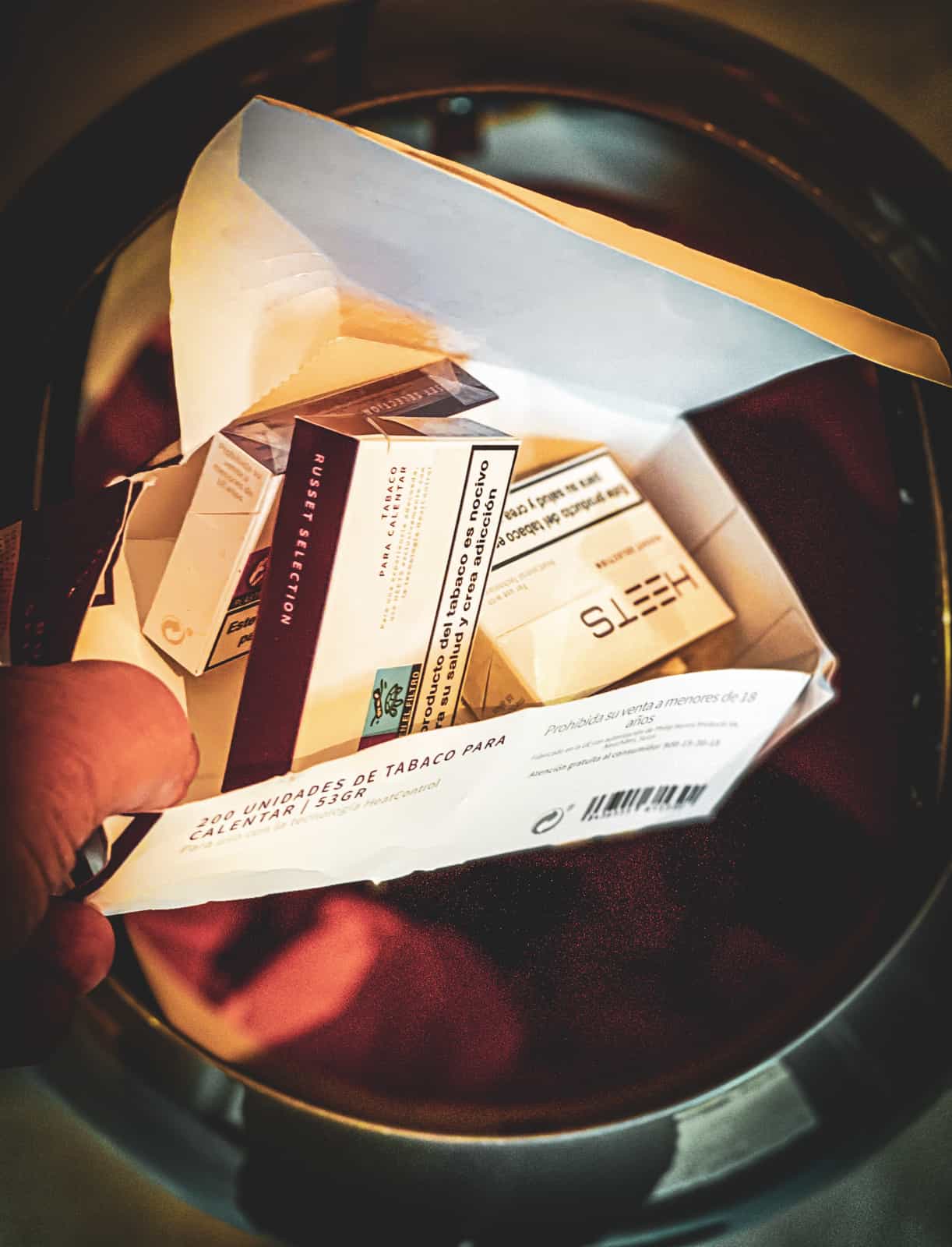
Last December I quit smoking. It was surprisingly easy. I think there were several reasons for that. For one, nobody around me smokes anymore. Two years earlier I had switched to IQOS. Only after you've quit will you notice how pathetically that stuff stinks! Thousands of people sit at Philip Morris in product development. Which allegedly cost 4.5 billion US dollars. In the press release it reads totally euphoric: "IQOS represents more than a decade of scientific development, approximately 4.5 billion US dollars in research, and more than 4,300 registered patents."
And then the stuff smells like caramelized full baby diapers...
You know that sound when someone next to you takes a drag on a cigarette? When the ember flares up. The soft crackling. The scratchy smoke in your throat that you think you can feel again. Well, none of that exists with IQOS. Basically it's a kind of smelly nicotine patch. But that's also precisely what's great about it: when you quit, it's one tough week. But when someone next to you smokes IQOS, it wouldn't even cross your mind to buy a device again and a pack of HEETS and start all over.
In Mallorca, during the Covid era, smoking at outdoor restaurant tables was banned. People had to go to the sidewalks. And strangely enough, that happened relatively rarely. And you simply got used to smoking less when going out. The Podemos government, roughly comparable to the "Greens", then simply kept the ban in place — probably illegally. Even when all Covid measures had ended, smoking at the table remained forbidden. And to this day I hardly see anyone smoking in Mallorca anymore.
But When Are You Going to Lose Weight?
The old hypochondriac was wallowing in self-satisfaction. The supposedly biggest problem, smoking, was solved. Hopefully still in time to get through the next few years without lung cancer. But in any case, that's no longer in my hands.
This pushed the weight loss issue more to the forefront. Because I was becoming increasingly aware that it would be just as important for my health to somehow manage that successfully. I wasn't fundamentally unhappy. Felt fit enough, was married to a woman who looks much better than me anyway. And therefore had objectively few reasons not to stare contentedly at my belly every morning and — aided by my now age-related diminished eyesight — convince myself that it didn't look so bad after all.
But then a friend called and said a mutual acquaintance had lost a lot of weight with a medication, and my curiosity was piqued. At first it sounded like some semi-legal insider tip. And I had visions of transactions taking place in the back room of a pharmacy. You know, with briefcases and cash or something. But in fact, the EU medicines agency had already approved the medication and recommended it for patients with a BMI over 30.
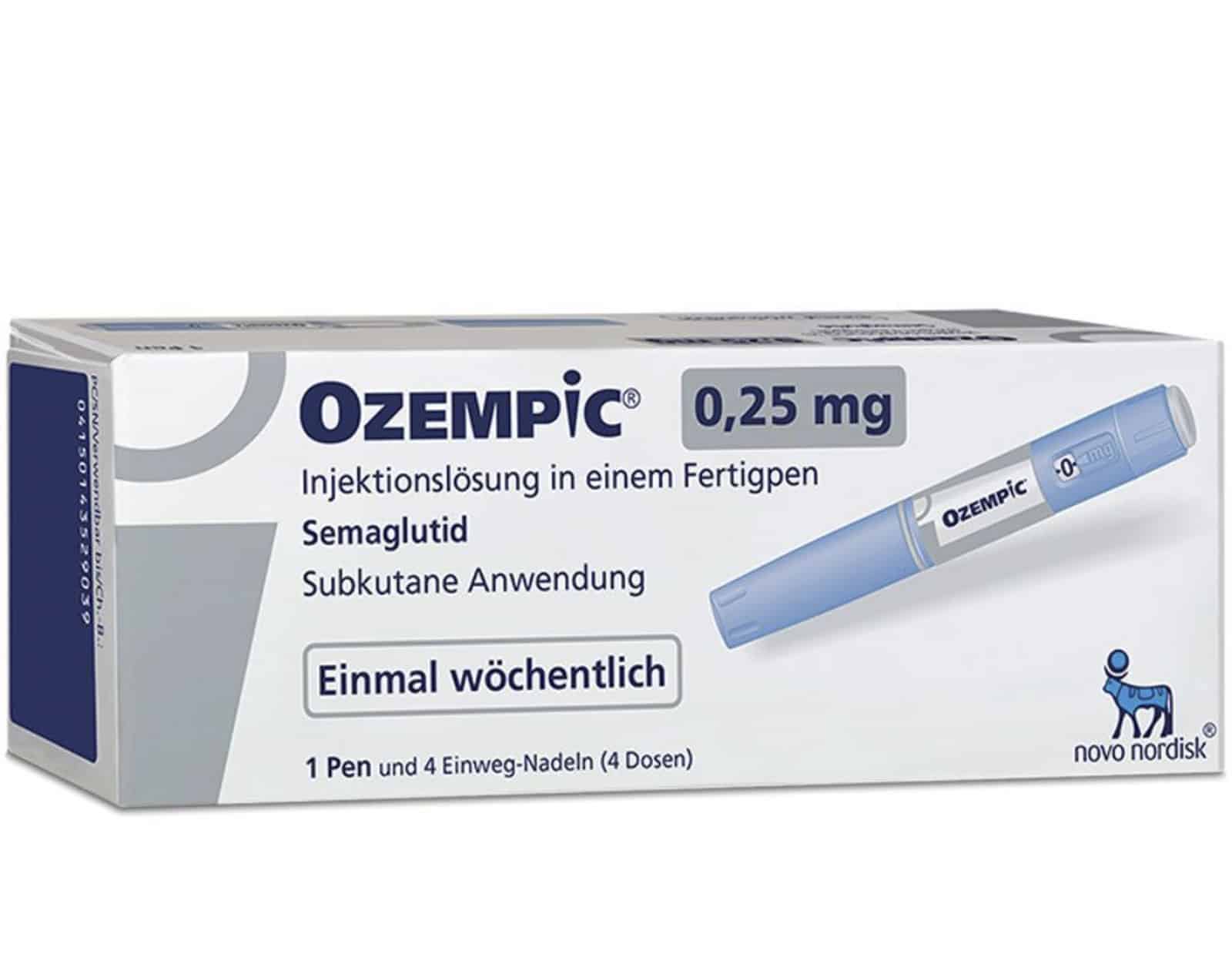
With that same BMI, I had previously "won" an early Covid vaccination. And actually, it turned out to be no problem at all to get the monthly dose of the medication prescribed and administered by my internist. I'm getting Ozempic, the active ingredient is called semaglutide and belongs to the glucagon-like peptide-1 agonists (GLP-1 agonists). As NDR reports in its article "A Diabetes Medication Makes the Pounds Melt Away", the medication lowers blood sugar levels, reduces cardiovascular risk, and the risk of nerve damage. The active ingredient mimics a naturally occurring messenger substance, the hormone GLP-1. This normally comes from the gastrointestinal tract and signals satiety to the brain. It also slows gastric emptying.
Semaglutide — Placebo Double-Blind
Before I had a semaglutide medication prescribed, I had also extensively studied the research. The results are truly extremely impressive. A group of several thousand subjects lost a median of 10–20% of their weight over a period of about 60 weeks. The placebo group only about 5%. Side effects are of course also reported: from nausea to diarrhea and constipation (simultaneously?!) to gallstones — an unpleasant lineup, but certainly less severe than the consequences of obesity. More concerning actually is the fact that after discontinuing the medication, the pounds apparently come back. And thus the medication would potentially need to be taken for life. Which the health insurance companies would certainly not pay for, since the BMI would no longer be over 30.
The treatment was generally accompanied by nutrition and exercise programs. Obviously the manufacturer had found a goldmine. Because what could be better in our decadent Western society than pharmaceutical support for the perfect figure? Speaking of decadent — press reports mentioned a single injection costing $1,600. Perhaps that was a different medication. Or prices in Spain are lower. In any case, I paid €160 here for the monthly pack.
I've been injecting Ozempic for two weeks now. "Injecting" is almost an overstatement — the tiny disposable needle that I peel out of its packaging once a week is so fine that I can't even feel it. It's placed on a cartridge containing the medication, and then the dose, defined by a dial wheel, is "shot" under the skin. The professional term is "subcutaneous".
In the first week I didn't notice any effect. And I had already been losing weight in the weeks before, because I'd been paying more attention to my diet and had started exercising again. Now in the second week, my appetite has noticeably decreased, especially when it comes to sugary products. I had a strong craving for Belgian waffles and the best wife of all prepared her fantastic batter. We still argued about whether four of the squares from the large waffle iron constituted one or four portions. In fact, I gave up after two squares of those wonderful works of art dusted with powdered sugar. I couldn't eat any more — I felt slightly nauseous.
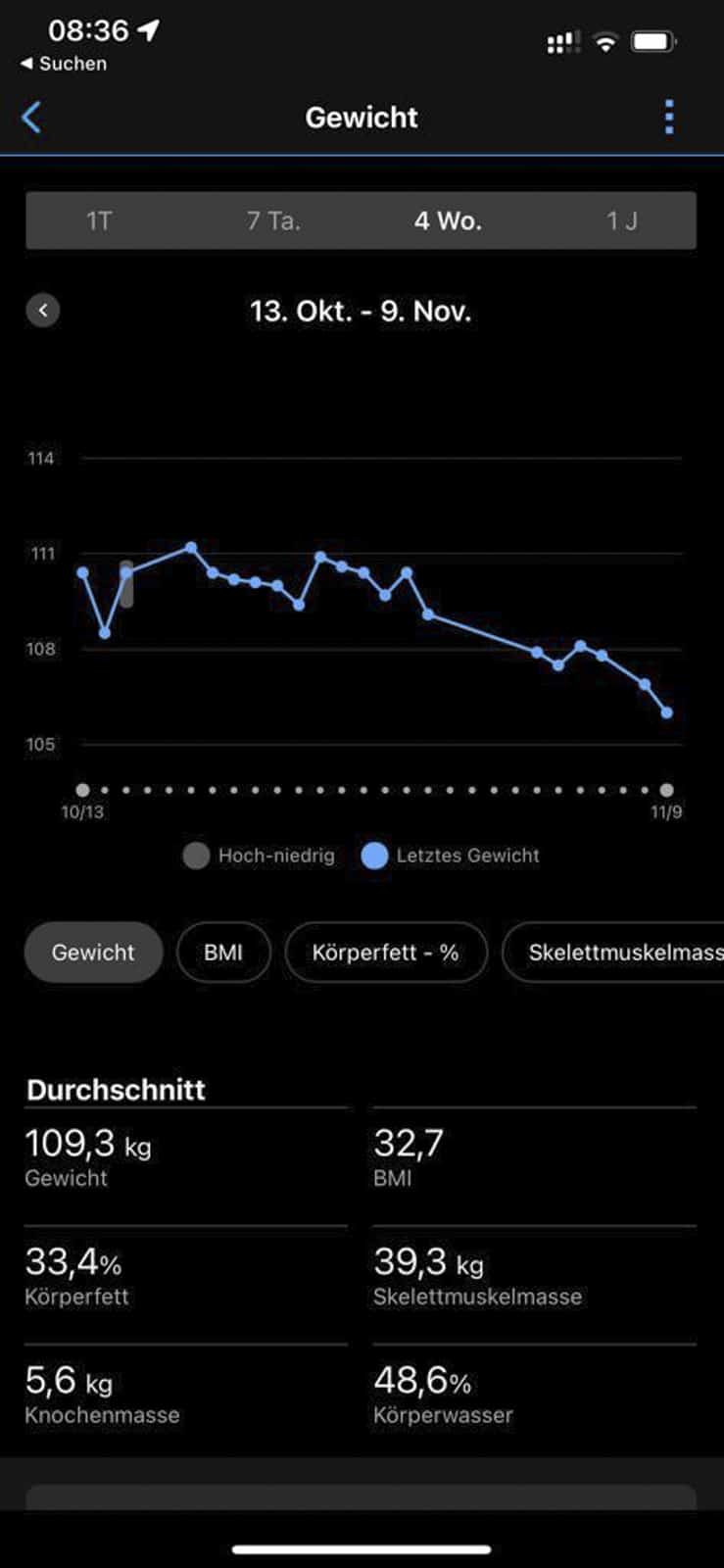
After two weeks now, I notice that my appetite has significantly decreased. Not the initial appetite, when you suddenly crave a large plate of spaghetti. But rather the hunger that, once the plate is in front of you, is simply satisfied more quickly. I feel like I'm now eating about a third to 50% less than before. And particularly in the evenings. I was never a breakfast person (espresso with a cigarette...) or a lunch eater (don't you people have to work?). But in the evenings I would happily eat several portions. That's over now. Fascinating!
Is this definitely due to the medication? I can't prove it. Maybe I'm just successfully imagining it. But even if so, it would serve its purpose for me.
So, today the scale showed exactly 106 kilos. Hopefully it continues like this — I'll keep you posted!