Foreigners Can No Longer Buy in Mallorca?
By Arnd
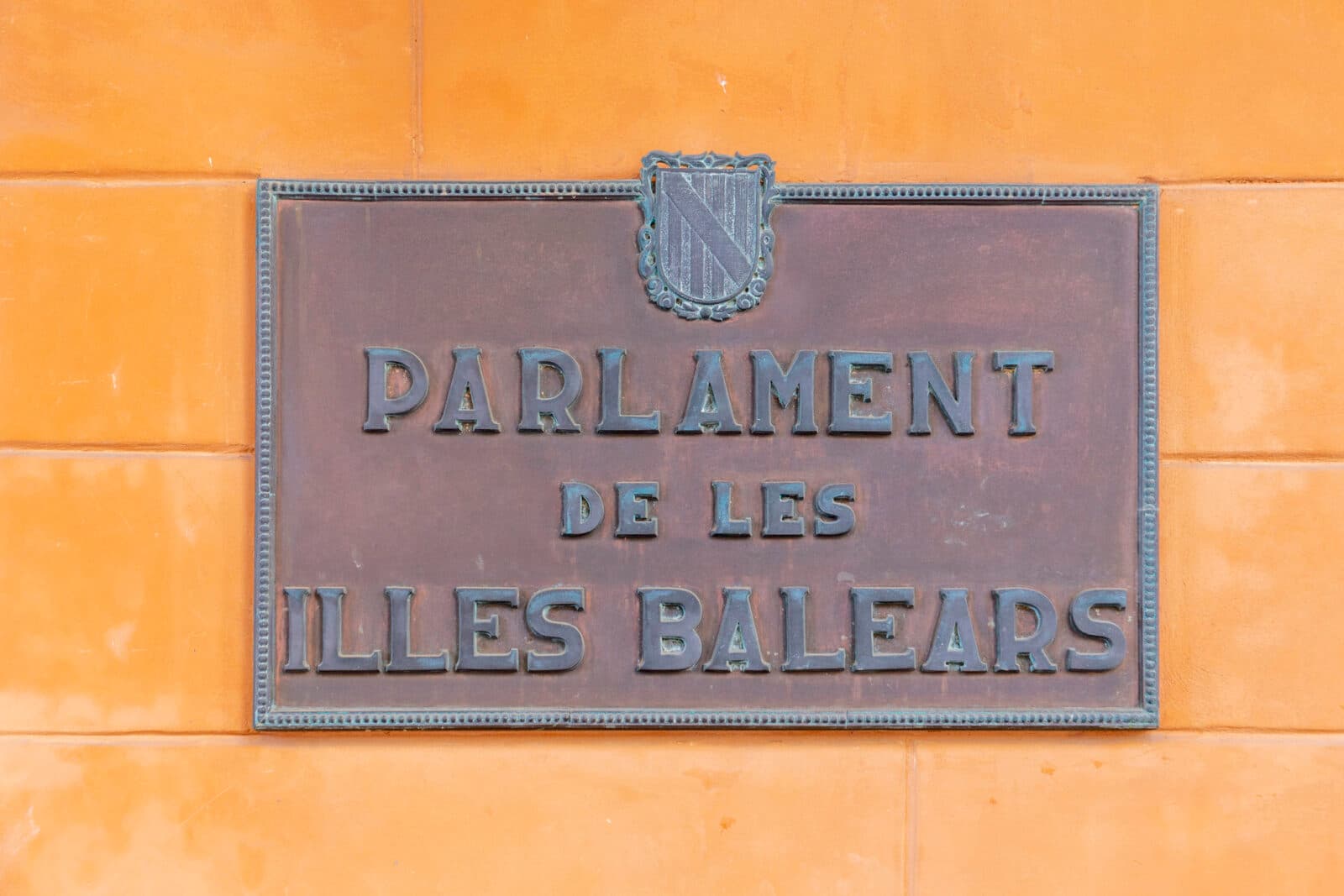
Property Purchases for Non-Residents Over?
Foreigners can no longer buy in Mallorca? No property, neither a house nor an apartment? Admittedly, that's a bit provocative. But if yesterday's vote in the Parliament of Mallorca is anything to go by, in the future only people who have been resident on the island for at least 5 years will be able to purchase property. Residency here is called "residencia". And it doesn't mean you have to be Spanish to buy — it basically means you would need to have your primary residence on the island.
What About the EU?
There are critics who believe that such a regulation would be incompatible with European law. I don't think there would actually be a conflict here. Sure, the government would first have to present a corresponding law to parliament. Which would then have to be reviewed and passed. But as long as EU citizens of different nationalities are not fundamentally treated differently, one can roughly assume that there would be no discrimination. And since any EU citizen would be free to establish themselves as a resident in Mallorca, this restriction would in my view be entirely possible.
If companies are still to be allowed to buy property, then a foreign European company would also have to not be treated worse than a domestic European company. And actually, it shouldn't be relevant whether the shareholders — the owners of the company — are domestic or EU-foreign nationals. This would then also bring the first likely circumvention strategy for a potential law within reach. Or, in the case of more far-reaching regulation with discriminatory character, a possible violation of European law.

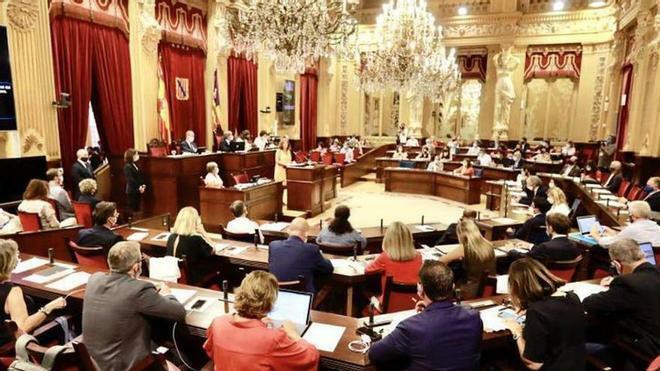
The parliament has no legislative function. It can only vote on bills that are typically presented by the governing coalition. Essentially, it is largely powerless on its own. But nevertheless, it is composed of representatives from the various parties, and of course there is a signalling effect on the government, especially since the new elections are less than half a year away.
The debate in parliament was initiated by the opposition regional party El Pi. And in contrast to the last attempt in July, when the island council in rare unity of conservatives and left-wing government blocked a similar push by the left party Podemos, this time it was successful.
What Does This Actually Mean?
For now, it should be understood as a kind of party-political mandate to their own representatives in the Balearic government. Who would of course have to coordinate with the central government and other involved bodies. But in my view, it is now a very clear declaration of intent by the people's representatives, which their own party colleagues can hardly completely ignore. Especially not before the elections.
Why Is This Being Done?
There has long been a major problem with affordable housing for locals. Comparable to any highly sought-after location, it has become almost impossible here in recent years to find a rental apartment for under 800 euros. And that with an income level far below Munich. Likewise — as in many parts of Europe — it has become nearly impossible for average earners to build property ownership through employment. To counter these problems, holiday rentals have already been dramatically restricted for years. Then rent controls were introduced. Which have largely not worked across Europe. And now this kind of sales ban is to follow as the next ineffective measure ...
Why Doesn't It Work?
Relatively simple. When demand is greater than supply, prices rise. Now it is actually a widespread ideology among both left-wing and right-wing ideologues that you just need to ban enough things so you don't have to get creative yourself.
That already went thoroughly wrong in the examples cited above — holiday rentals and rent controls. But what's so bad about sales restrictions? Wouldn't that push prices down?
Yes, it actually would. Suddenly demand would collapse. Until investors then snap up the properties at bargain prices. Probably behind nested corporate structures. With a Spanish company at the front. So if the government fails in a potential bill to effectively prevent this, this would be the first point where a law would simply be circumvented or, as already outlined, possibly not be compliant with European law.
Those villas that have been built since about the 1980s, mainly in the southwest or also in Son Vida, were always conceived as luxury products of their respective era. They were never part of the normal housing market. Rather, they were developed as new residential areas by Mallorcans who owned vast tracts of land there. A nice article just appeared in the Mallorca Zeitung about Santa Ponca, in which it is described in passing how the Nigorra family planned and built this town. And today we already see the third generation of buildings on the same plots. So they're simply demolished. And rebuilt. Is that sustainable? Not really. Does it squeeze the rental housing market for residents? Certainly not.
But is there also a problem with affordable housing in the attractive cities? Yes, absolutely. Of course, prices in Palma have also skyrocketed. But to be fair, this is a phenomenon we've seen across Europe in capital cities. One that was simply created by the unbridled printing of money and low-interest-rate policy.
If we want to counteract this, in my opinion it would only work by rezoning certain areas or property types for specific uses. This could of course also include use exclusively by residents. And I suspect that to be legally sound, there would have to be grandfathering provisions. But then it would also have to be considered whether residents should continue to be allowed to put their owner-occupied property into holiday rental. In my opinion, this has massively promoted illegal holiday rentals and has actually not contributed to easing the housing market. And ideally, we counteract by building new housing. Because housing was already in short supply ten years ago. And the current government has not fulfilled its election promises to create housing.
Mallorca Can't Afford This ...
The people who would have liked to buy in Mallorca would then rent instead. So rents would continue to rise. Perhaps not in the standard segment, but at least in the luxury segment. Other clients would go to different locations. Because Mallorca is fantastic. But when the downsides of the product become overwhelming due to excessive and misguided regulatory frenzy, more and more clients turn away. The overall package has to remain attractive, after all.
Furthermore, I'd like to also highlight the revenue side. The property transfer tax here has so far been 8-11.5%, from next year probably 13% at the top end. In my view, this is the main source of revenue for the Balearics. With every property transaction, the island government opens its pockets wide. In a way that even we in Germany find unfamiliar. These revenues would of course be massively reduced. And construction activity, which has been massively increasing through renovations of existing properties, would also decrease. With the entire chain reaction that would follow.
Who Does It Better?
It pains me to say this. But honestly, the North Tyroleans do it better. Who somewhat fraudulently call themselves simply Tyroleans. They have devised a so-called "Freizeitwohnsitzwidmung" (secondary residence designation), which only a relatively small number of houses or apartments have. And only there may a person who doesn't have their primary residence live. Did that work? No, it actually only created legal uncertainty, and most South Germans still threw themselves into the madness of ownership without legal certainty, if they could afford it. And the business-savvy North Tyrolean generally ignores his 11-month-absent neighbours, because he knows that this is precisely how the region's income is generated. But how did the Austrians manage to solve the problem of affordable housing?
They designated building areas that were created for people working in the region and for families. There, building land prices are affordable and the buyer has to accept a decades-long corresponding use restriction. Did that solve the problem? Certainly not completely, but it's a good concept. Because it creates solutions going forward. Rather than simply banning things.
But What Is the Solution?
To solve the housing shortage, there is only one sensible answer: Build! It's as simple as it has so far not significantly happened. And this runs through pretty much all governments. Housing construction packages are promised, social housing construction is announced.
This housing would have to be purpose-restricted. Not just social housing, but simply good residential areas that, thanks to affordable land, are accessible also for residents building equity. Not just for rental.
But as long as governments persist in dull inaction, they then have to resort to populist measures that everyone knows will not achieve their goal.